How To Search for Cleveland Property Records

Cleveland's revitalized neighborhoods and affordable homes make it an attractive option for investors seeking long-term growth. However, you should always do your due diligence before buying or investing in any real estate by checking property records. They offer essential information like ownership history, assessed value, outstanding liens, zoning regulations, and legal actions, all crucial for making sound investment decisions. Property records are public in Cleveland, meaning that anyone can view them or get copies. The key is knowing where to look. We have listed helpful resources below that you can use to search for Cleveland property records.
Cuyahoga County Fiscal Office

The Cuyahoga County Fiscal Officer oversees multiple property-related functions for Cleveland, including recording legal documents related to property ownership and transfer, listing and valuing properties for tax purposes, and managing tax data. This makes the fiscal office a centralized hub for property-related matters and an invaluable resource for a wide range of Cleveland property records. These include deeds, mortgages, liens, ownership data, assessed valuations, land and building data, parcel maps, sales histories, and much more. The fiscal office provides a records search tool that you can use to look up these records and request copies online. You can either perform a "quick search" by name, document type, or document number or select the "advanced search" option, which allows you to refine results by additional criteria, such as date range, volume, and address. If you prefer in-person services, you can visit the fiscal office at 2079 East 9th Street, Cleveland, OH 44115; you can also call (216) 443-7420 for inquiries.
Cuyahoga County Treasurer's Office

The Cuyahoga Treasurer's Office is responsible for collecting and distributing property taxes in Cleveland. This office is another great resource for property records, including current tax bills, valuation histories, payment histories, and more. You can look up this information online using the county's MyPlace tool; searches may be done by name, address, or parcel. You can also visit the treasurer's office at 2079 East 9th Street, Cleveland, OH 44115, to search for and copy records in person, or call (216) 443-7400, option 1, for inquiries.
Local Courts

The Cuyahoga County Court of Common Pleas, the Cleveland Municipal Court, and the Cleveland Housing Court are also valuable resources for property records, especially for information relating to legal proceedings involving real estate, like foreclosures, liens, title disputes, landlord/tenant disputes, and civil judgments. These courts provide access to search tools on their official websites that you can use to look up records online by name or case number. If you prefer to search for and get copies of these records in person, you may do so at the Cuyahoga County Justice Center, located at 1200 Ontario Street, Cleveland, OH 44113. You can call the Cuyahoga County Clerk of Courts at (216) 443-7950 or the Cleveland Municipal Clerk of Courts at (216) 664-4870 for more information.
Cleveland Property Taxes
Cleveland property taxes are a vital funding source for local government services, including public schools, emergency response, police and fire departments, road maintenance, parks, libraries, and more. The Cuyahoga County Fiscal Officer is responsible for discovering, listing, and valuing real property in Cleveland for tax purposes, while the County Treasurer is responsible for collecting tax payments. A property's market value is estimated by considering factors like location, size, condition, recent sales of comparable properties, and improvements made to it. The fiscal office revalues all properties every six years, updates values every three years in between, and reviews new improvements to each property annually. Properties in Cleveland are assessed at 35% of their market value. This assessed value is then used to calculate property taxes.
Tax payments are generally due in two installments, usually on the third Thursday of February and the third Thursday of July. A 10% penalty is charged for any payments that are not made in full within 10 days of the due date. Additional penalties will also be charged, the longer the taxes remain unpaid. Continued delinquency can lead to a lien being placed on the property and subsequent foreclosure action. The Treasurer's Office offers several payment options for Cleveland property taxes, including online payments, mail-in, drop box, in person at their office, and phone payments (by calling 1-877-738-1212). The office also offers delinquent tax payment plans for homeowners who are behind on payments. You can call (216) 443-7400 for more information.
![]() Assessments
Assessments

The Cuyahoga County Fiscal Office assesses real properties in Cleveland every six years to determine their taxable value. This process is referred to as "sexennial reappraisals". In addition to the sexennial reappraisals, the department also updates assessed values every three years (triennial updates) and conducts an annual valuation of changes and improvements made to properties in the city (based on pulled building permits). Property values are assessed using data from comparable recent sales, neighborhood trends, and specific property characteristics. The most recent sexennial reappraisal in Cleveland was conducted in 2024, with the new assessed values effective January 1, 2025. The next major valuation update is scheduled for 2027.
You will typically receive a valuation notice in July of the assessment year informing you of your property's new assessed value. If you disagree with the valuation, you can file an informal review complaint with the fiscal office's appraisal department no later than 30 days after receiving the notice. The department usually sends out notifications of valuation adjustments (based on the review) in November. If you are still unsatisfied with this valuation, you can file a formal tax complaint with the Cuyahoga County Board of Revision (BOR). The filing window for formal complaints is usually January 1st and March 31st. You can call the Cuyahoga County Fiscal Office at (216) 443-7420, option 3, if you have any questions about your property valuation or need help with any part of the complaint process.
![]() Appraisals
Appraisals

Cleveland assessments work similarly to appraisals. They both determine the fair market value of property by comparing similar properties with others in the local area that have sold recently. In cases of odd structures or new construction, the county may call upon an appraiser to help determine the value. Estate planners, courts, and lenders also use appraisals to value real property.
![]() Tax Rates
Tax Rates

The median effective tax rate in Cleveland, Ohio, is 2.64%. This is significantly higher than both the national median of 1.02% and the Ohio state median of 1.80%. The city's average annual tax bill is $2,935, which is also higher than the national average of $2,400.
Here's a look at how Cleveland's tax rate compares to other counties in Ohio:
- Butler County 1.23%
- Champaign County 1.33%
- Crawford County 1.54%
- Franklin County 2.10%
- Hamilton County 2.32%
- Harrison County 1.35%
- Lucas County 2.38%
- Medina County 1.53%
- Noble County 1.86%
- Seneca County 1.43%
- Shelby County 1.56%
- Stark County 1.67%
- Summit County 1.63%
- Trumbull County 1.84%
![]() Exemptions
Exemptions

While Cleveland's property tax rates are above the national and state medians, the overall tax burden is moderated by relatively low property values. Still, some homeowners may find it difficult to keep up with their tax obligations. Fortunately, there are several tax relief programs available to eligible Cleveland residents. These include:
- Homestead Exemption Program: This is available for senior citizens (65+), permanently and totally disabled homeowners, disabled veterans, and the surviving spouses of public service officers killed in the line of duty. To qualify, you must own and live in your home as your primary residence, and your household income must be below a state-set threshold.
- Tax Assistance Program: This provides a one-time financial assistance of up to $10,000 to homeowners aged 70 or older with certified tax delinquencies.
- Residential Tax Abatement Program: This is available to both homeowners and developers and freezes property taxes on the value added by new home construction or major renovations for a specified period.
You can contact the Cuyahoga County Fiscal Office at (216) 443-7050 or (216) 443-7420 for more information on available tax relief programs and how to apply for one. You can also call the Cuyahoga County Treasurer's Office at (216) 443-7400, option 1 (for information on the tax assistance program), and the Cleveland Community Development Department at (216) 664-4423 (for information on the residential tax abatement program).
Cleveland Building Permits/Inspections
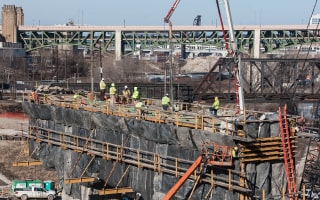
You will need a permit for new construction and renovations that add to, alter, or change the use and occupancy of existing buildings and their systems. Exemptions may be made for cosmetic work and minor repairs, so long as the work does not alter the building's structure and systems. Examples of this exempted work include painting, patching walls and leaking roof coverings, and replacing broken window glass or glazing. Permits are issued by the Cleveland Division of Construction Permitting, and you can apply for one online using the city's Citizen Access Portal. You can also schedule inspections, track application status, and submit plans electronically through this portal. If you prefer in-person services, you can visit the division's office at Room 505, 601 Lakeside Ave., Cleveland, OH 44114. You can also call (216) 664-2910 for inquiries.
The types of permits issued in Cleveland include:
-
Construction Permits: Required for building new structures or making major alterations to existing ones.
- Commercial Building Permits: For constructing, renovating, or occupying buildings used for business or commercial purposes.
- Demolition Permits: Required before tearing down any structure to ensure safety and proper disposal.
- Family Dwelling Permits: For construction or renovation of single- or multi-family residential homes.
- Fencing Permits: Required for building or replacing fences to ensure they meet zoning and safety standards.
- Home Building, Rehab, and DIY Permits: Required for homeowners undertaking new builds, renovations, or significant DIY projects.
- Pool Permits: Needed to construct or modify swimming pools.
-
Trade Specialty Permits: Required for specific types of skilled work performed by licensed professionals.
- Electrical Permits: For installing, upgrading, or repairing electrical systems in residential or commercial properties.
- HVAC Permits: For installing or modifying heating, ventilation, and air conditioning systems.
- Plumbing Permits: For any plumbing work, including new installations, repairs, or upgrades.
- Solar Panel Permits: Required to install solar energy systems, ensuring structural and electrical safety.
When applying for any of these permits, you must submit the proper documentation (building plans, blueprints, contractor licenses, materials lists, etc.). You must also pay the appropriate fee.
Building inspections are part of the permit process, and they ensure that the work complies with local building and safety codes. You can schedule an inspection through the online portal or in person at the office during regular business hours.
Real Estate in the City of Cleveland
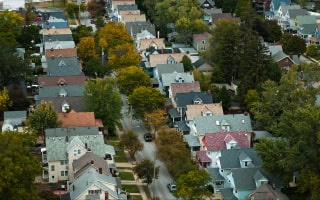
Cleveland is home to the Rock and Roll Hall of Fame, one of the most iconic music institutions in the world, and Playhouse Square, the second largest performing arts center in the U.S. The city also boasts three major league professional sports teams (the Cleveland Browns, Cleveland Guardians, and Cleveland Cavaliers) and serves as the center of the Cleveland Metroparks, one of the country's most extensive urban park systems.
Cleveland, Ohio, has a population of 372,624 residents. The city has 204,873 housing units: 171,450 of these are occupied and 33,423 are vacant, indicating an occupancy rate of approximately 84%. The city has a diverse mix of housing options, including single-family homes, downtown condos and lofts, duplexes, multi-unit apartment complexes, and senior and assisted living communities. Some housing styles include Victorian, Tudor, Craftsman, and Modern Contemporary. The average home value in Cleveland, OH, is $113,340, representing a 0.1% increase from previous years. Note that actual prices can vary significantly depending on the neighborhood. Here are a few examples of average home prices in different Cleveland neighborhoods:
- Brooklyn Center $105,908
- Central $127,310
- Clark Fulton $100,733
- Downtown $311,140
- Ohio City $292,806
- Tremont $347,386
The Cleveland, Ohio, real estate market is active and competitive. Home prices in the city have experienced substantial growth, driven by low inventory, but entry points remain relatively affordable compared to the national market. Listed homes typically go under contract in around 12 days, and about 39% of listings sell above the asking price.